
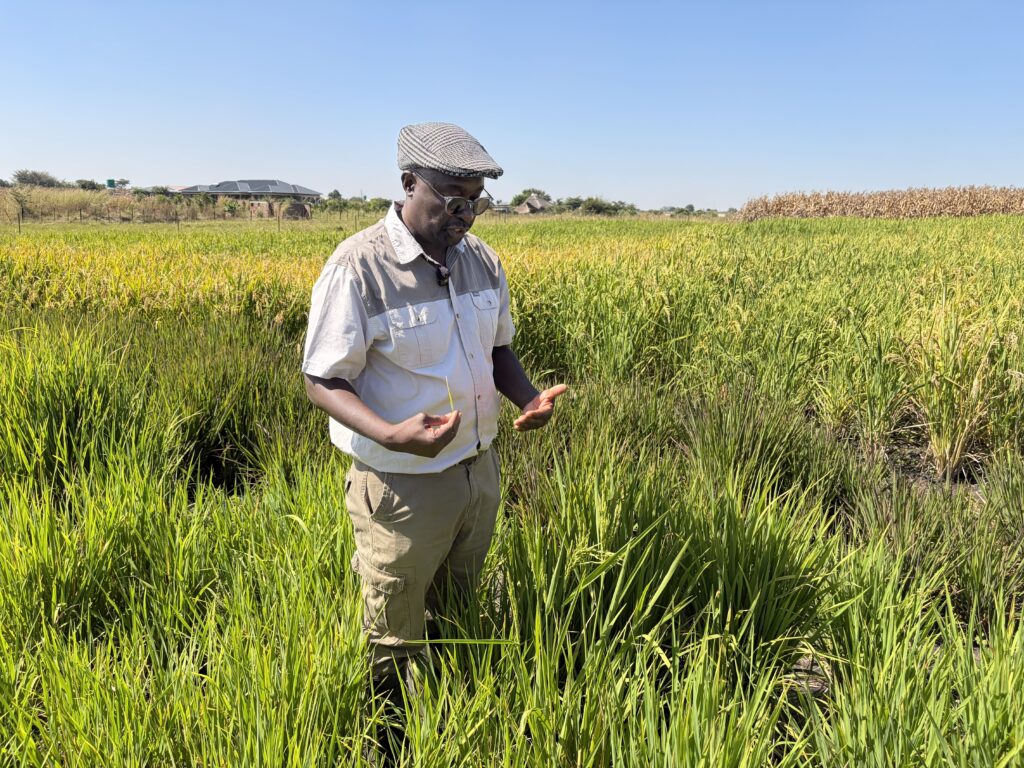
By Maricho Reporter
He is particular about how the soil is opened, how moisture is held, and how each crop responds to the smallest change.
Bongani Moyo recalls the early friction with his tractor operator, a clash born out of his insistence on getting the land exactly right. For him, farming begins with detail.
“We didn’t understand each other at first. But over the years he has become a good friend because he now knows what I expect. Without fine tillage, there is no good germination,” Moyo says—a line that captures how he works his land and why his results are beginning to show.
On just 1.3 hectares, he has built a system that depends less on size and more on close, constant attention—what many would call precision, even if it is done by hand.
His approach is not casual. “You develop a symbiotic relationship with your field and with your crops. So, I’m at a point where I know my soil, I know my crops and my crops know me.”
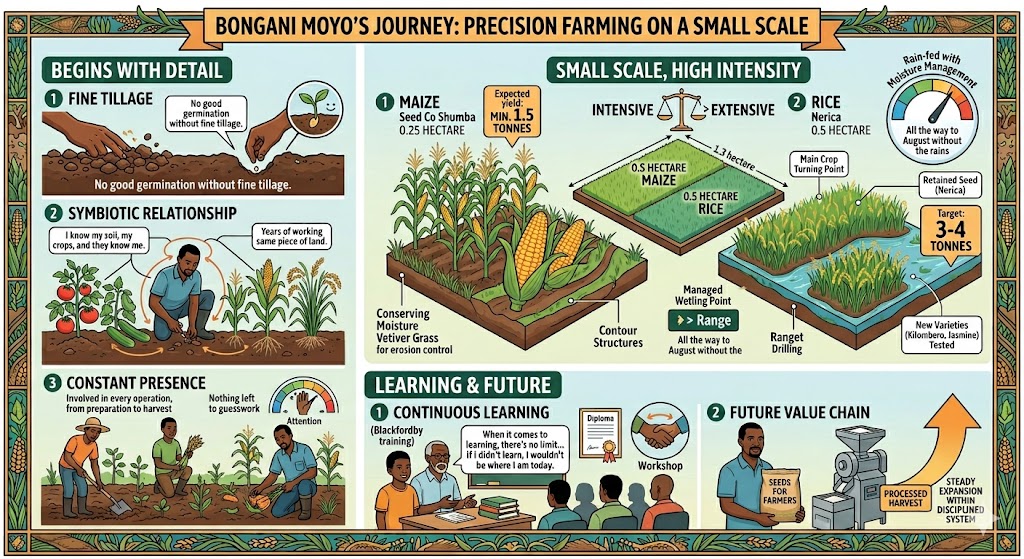
Years of working the same piece of land have allowed him to read it closely. That presence, he insists, cannot be replaced. He is involved in every operation, from land preparation to harvest, ensuring that nothing is left to guesswork. Without that level of involvement, he believes a farmer will struggle to get consistent results.
Moyo did not begin with rice in mind. His early focus was horticulture—tomatoes and cucumbers grown at home. When he moved onto his current land, he planned for maize and potatoes. “We never thought that rice would be our main crop,” he recalls.
The turning point came from the wetland on his plot. “We tried rice the first year. The first year, it was excellent and then thereafter, it has since become our main crop.”

“With the high moisture content… we can really take advantage and plant maybe between now all the way to August without the rains.”
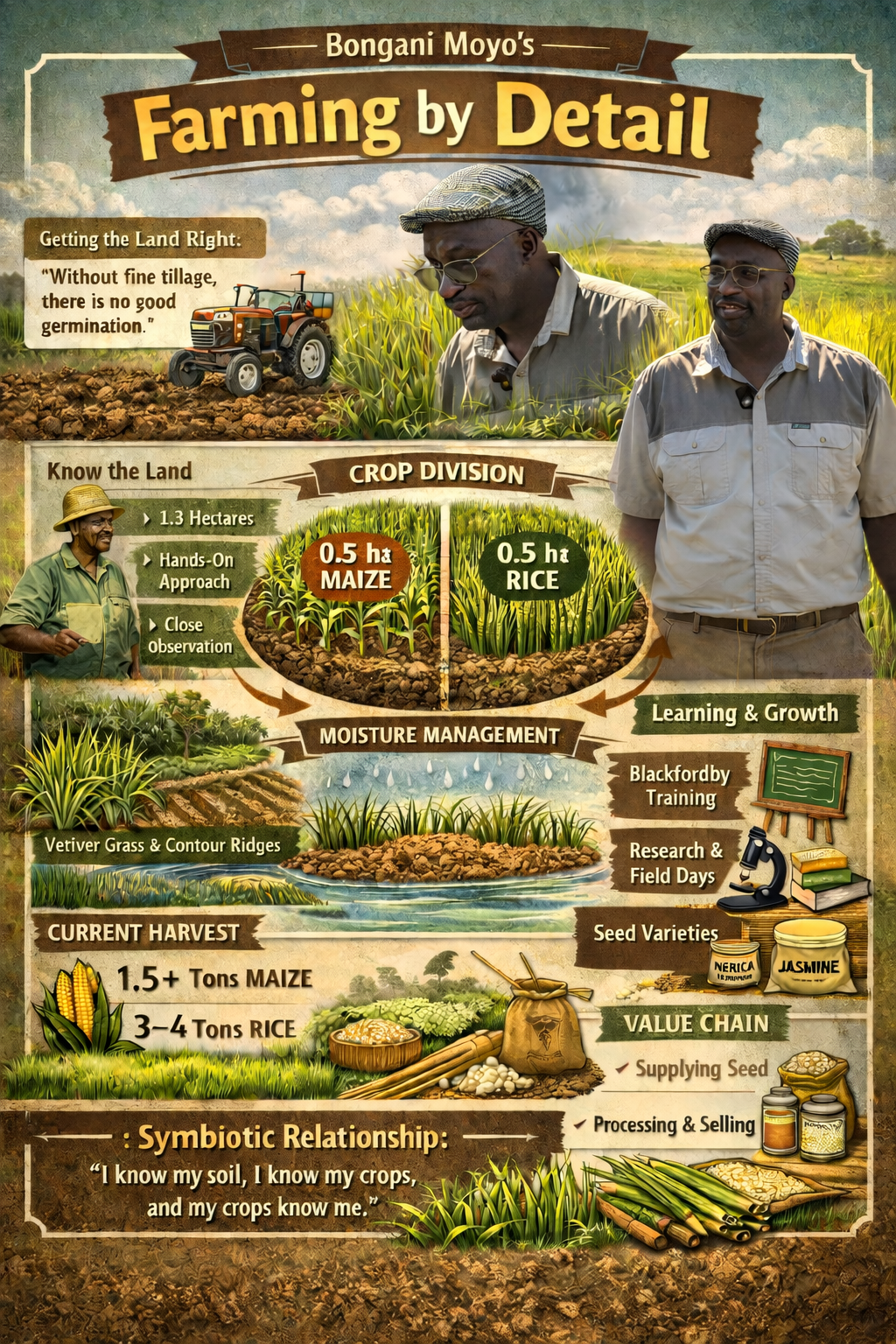
His maize, a Seed Co Shumba variety planted on a quarter hectare, is expected to yield at least 1.5 tonnes. Rice is where his confidence shows most.
From half a hectare, he expects a minimum of three tonnes and is targeting four tonnes this season. These figures come from close management rather than expansion. He has intensified production on a small space, refining each step rather than increasing land size.
Seed choice and management also reflect this attention to detail. He has worked with Nerica rice for four to five years and values its ability to produce retained seed. New varieties such as Kilombero and Jasmine are being tested, with results to guide future decisions. His planting methods vary between drilling and transplanting, adjusting seed rates accordingly, showing a willingness to adapt based on conditions.
Learning remains central to his progress. He traces part of his development to training at Blackfordby, where he enrolled despite being older than most participants. “When it comes to learning, there’s no limit… if I didn’t learn, I wouldn’t be where I am today.” He continues to attend field days and workshops, treating knowledge as part of production.
Looking ahead, his focus is not just on growing but on following the full value chain. He already supplies rice seed to other farmers and processes part of his harvest, aiming to capture more value from what he produces. The plan is steady expansion within the same disciplined system—guided by detail, presence and a clear understanding of the land he works.