

By Conrad Mwanawashe
ZIMBABWE’s beef industry, long a backbone of rural livelihoods and export earnings, is entering a decisive climate-smart transition as government and development partners align climate action with productivity, trade and economic growth.
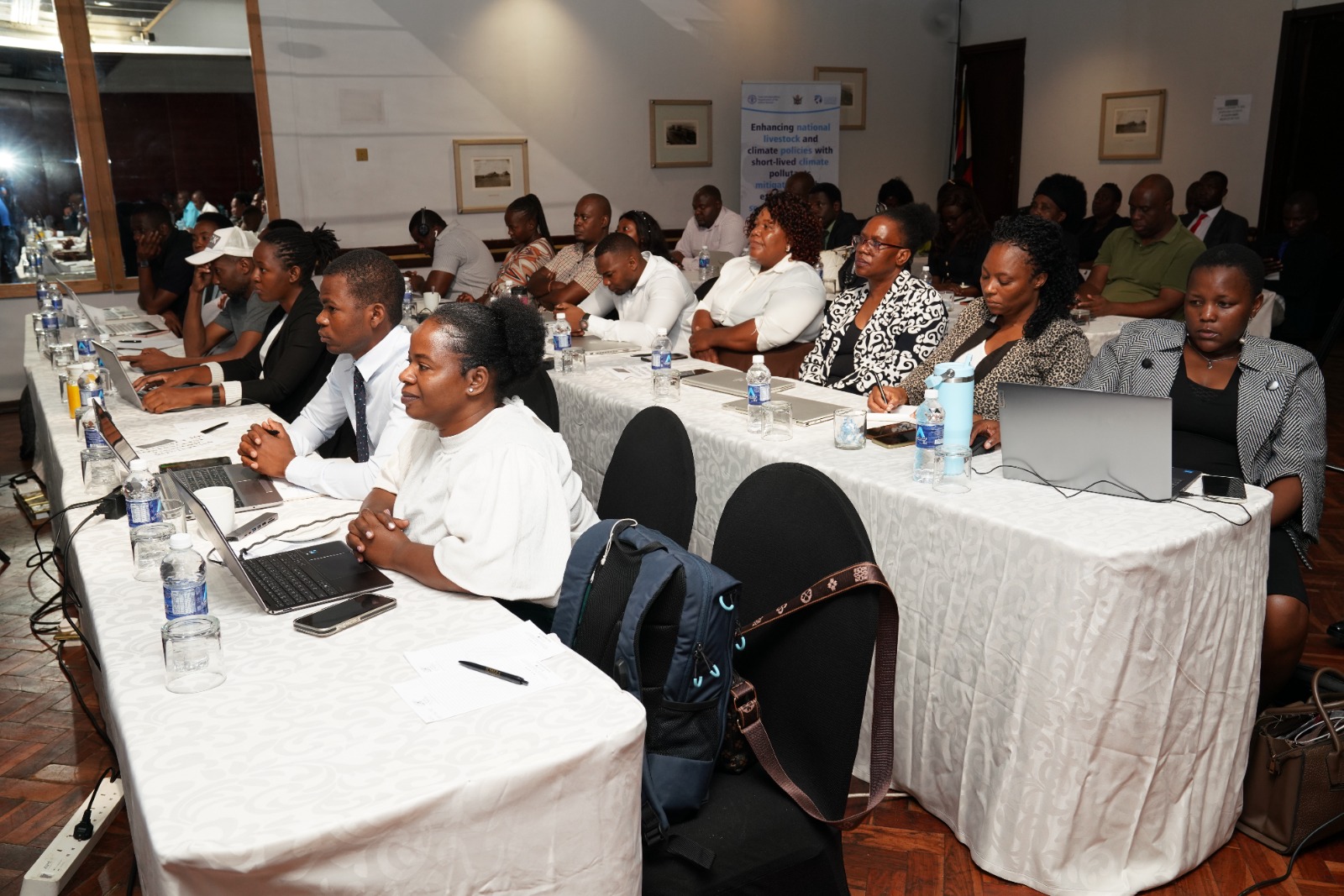
The “Enhancing National Livestock and Climate Policies with Short-Lived Climate Pollutants Mitigation in the Extensive Beef Sector in Zimbabwe” project, launched in Harare on Wednesday, signals a strategic shift: tackling climate risk while positioning the country’s cattle industry for the next generation of global markets.
Backed by US$400,000 from the Climate and Clean Air Coalition and implemented with the Food and Agriculture Organisation of the United Nations (FAO), the initiative aims to green Zimbabwe’s extensive beef sector by embedding methane reduction and climate resilience into national policy and on-farm practice.
It will drive climate-friendly feed and grazing systems, strengthen measuring,
reporting and verification of emissions, integrate short-lived climate pollutant targets
into policy frameworks and build technical capacity across the value chain.
Livestock supports more than 60 percent of rural households and contributes about 43 percent of agricultural GDP, providing food, income, draught power and a buffer against poverty. Yet the sector is under growing strain from droughts, heat stress and shrinking pastures driven by climate change, which are eroding animal health, offtake and export competitiveness just as demand for animal protein rises.
At the same time, cattle are a significant source of methane, a short-lived but highly potent greenhouse gas that warms the planet far faster than carbon dioxide and also contributes to air pollution that harms crops and ecosystems. As herd sizes and demand expand, emissions from enteric fermentation and manure are climbing, putting pressure on countries like Zimbabwe to prove they can grow livestock production without blowing their climate commitments.
Healthier, better-fed and better-bred cattle reach market weight faster, emit less methane per kilogram of beef and are more resilient to heat and disease, turning climate action into a productivity dividend.
FAO representative Dr Patrice Talla said Zimbabwe is already feeling the impacts of El Niño- and La Niña-driven droughts and water stress, which degrade pastures and cut herd performance. Unsustainable livestock systems, he warned, compound the problem by adding to short-lived climate pollutants.
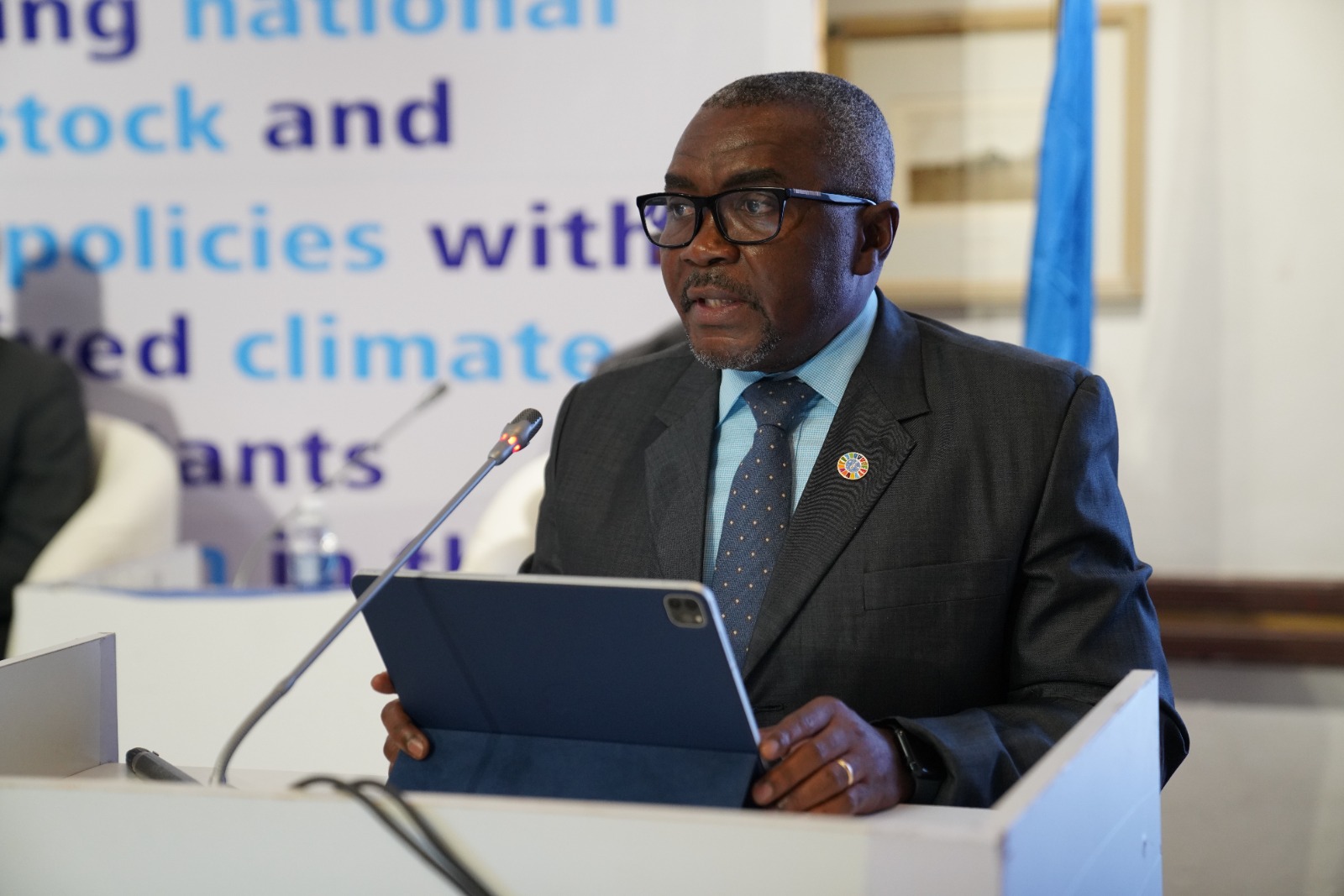
“Livestock offers numerous opportunities to reduce enteric methane emissions and support rural livelihood resilience. Zimbabwe can build more sustainable, climate-resilient, low-emission agrifood systems by addressing climate change in the livestock sector while contributing to the Paris Agreement’s goals,” said Dr Talla.
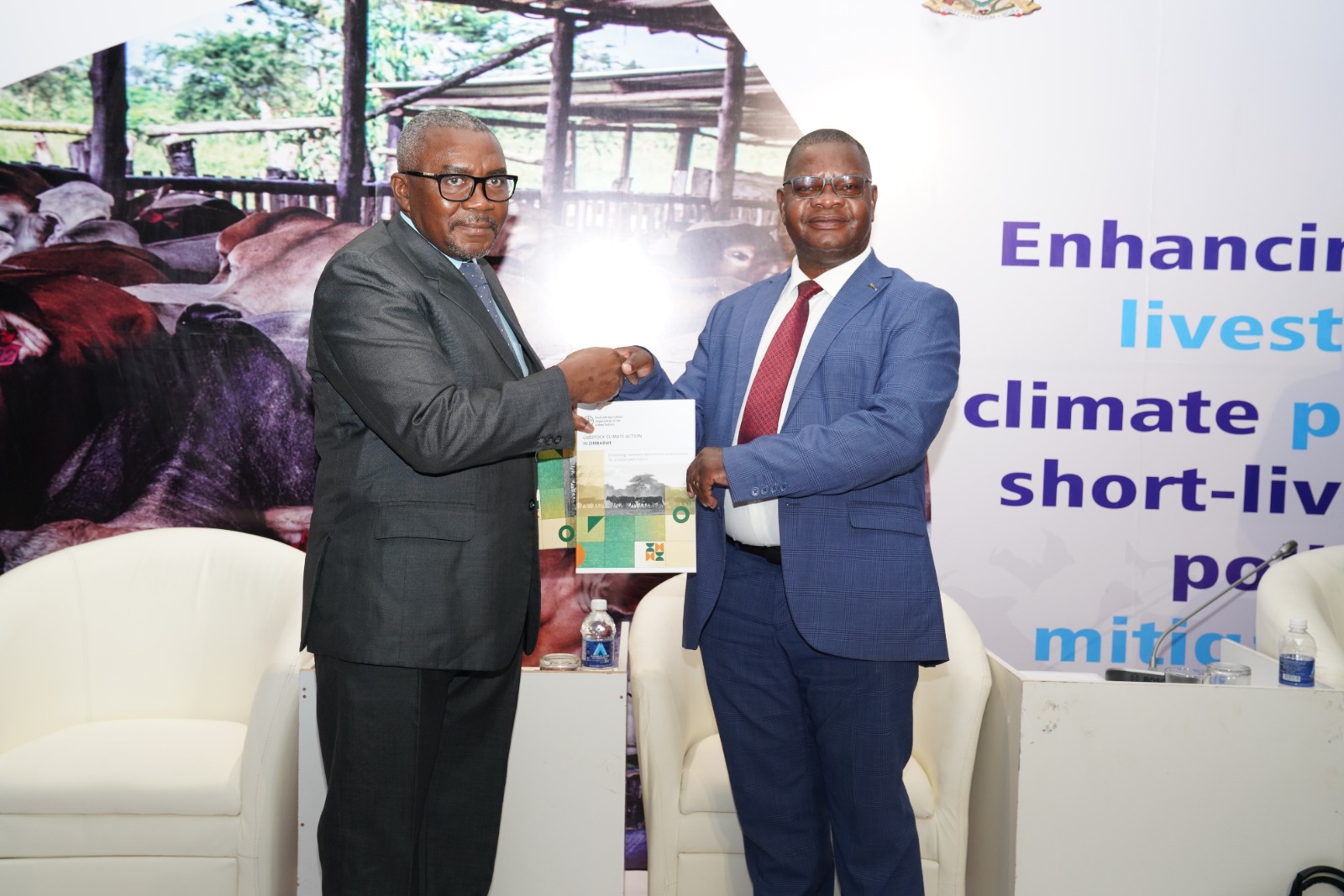
For government, the project is not a pilot but an implementation engine for national climate policy. Permanent Secretary in the Ministry of Lands, Agriculture, Fisheries, Water and Rural Development, Prof Obert Jiri, said Zimbabwe’s approach is to mitigate emissions while simultaneously adapting to climate impacts.
On the mitigation side, the strategy centres on sustainable grazing, improved feed and manure management, innovation in breeding and inputs, agroforestry, smart incentives and strengthened extension services, all underpinned by a new two-tier greenhouse-gas inventory that provides a scientific baseline for the cattle sector.
On the adaptation front, the focus is on climate-resilient breeds, expanded fodder production and better water management to protect farmers against drought and erratic weather.
“We are committed to scaling up climate-smart practices for promoting adapted breeds, enhancing fodder production, improving water management to protect our farmers’ assets against the drought and variable weather.”
Global beef markets are increasingly shaped by carbon footprints, traceability and sustainability standards, and buyers are paying premiums for meat that can prove its environmental credentials. A Zimbabwean beef industry that can document lower emissions through robust measurement and reporting will be better placed to access high-value markets, negotiate greener trade terms and attract investment into processing, cold-chain infrastructure and export logistics.
The project’s design reflects that commercial reality. By bringing together ministries, farmers’ unions, feed suppliers, researchers, financiers and private companies, it aims to ensure that climate-smart practices move from policy documents into paddocks and feedlots, reinforcing Zimbabwe’s ambition to build a US$15.8-billion agricultural industry by 2030.
The climate case is equally compelling. The Ministry of Environment, Climate and Wildlife, according Permanent Secretary, Ambassador Tadeous Chifamba, has made methane from livestock a central pillar of Zimbabwe’s NDC 3.0, recognising that the sector is now one of the country’s key emission categories as well as a vital source of livelihoods.
A recently completed national plan and methane roadmap funded by the Climate and Clean Air Coalition sets out how Zimbabwe will tackle short-lived climate pollutants such as methane and black carbon, giving projects like this one a clear policy anchor.
“Our inclusion of methane; a short-lived climate pollutant from the livestock sector in the country’s NDC3.0 Country Statement was a strategic move to leverage and enhance our capacity to meet our emission reduction targets as a country,” he said.
Taken together, these moves mark a turning point. By linking animal health, productivity, emissions accounting and climate finance to export ambition, Zimbabwe is betting that climate-smart beef can deliver both lower warming and higher incomes. In a world where the carbon footprint of food is fast becoming a trade barrier, the country is positioning its cattle industry not as a climate liability, but as a competitive, low-emission asset ready for premium global markets.