




By Conrad Mwanawashe
FINANCE, Economic Development and Investment Promotion Permanent Secretary, George Guvamatanga, says the fiscal joyride is over, instituting a zero-tolerance policy after revealing that government Ministries, Departments and Agencies (MDAs) tossed an unbudgeted US$60 million around like confetti on vehicle rentals as at end-2024.
This extravagant spending—enough to have purchased a permanent fleet of 3,000 vehicles—occurred despite the Treasury having already secured sufficient motor vehicles to support government operations between 2018 and 2022.
In a discussion on a ZFN Capital Friday Drinks programme, recently, Treasury Chief Guvamatanga, highlighted the gravity of the issue and underscored the reckless nature of unauthorised expenditures.
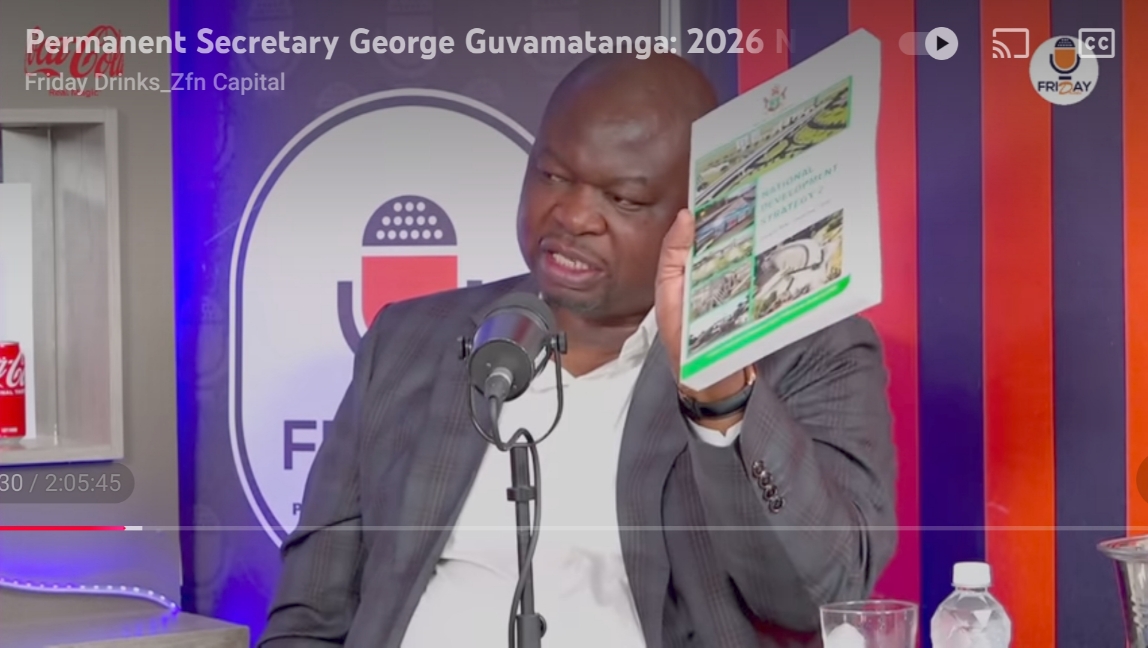
“In 2022, Treasury wrote a circular to all ministries, departments, and agencies, everyone at district level, to say that from the period 2018 to 2022, we actually believe that as a government, that we have tried to acquire enough motor vehicles to support normal operations of government. Not adequate, not enough.
“There are more required. But now, because we believe we’ve acquired enough, try to find your way in terms of running of government with the vehicles that we’ve purchased. Do not hire motor vehicle,” said Guvamatanga.
Despite this directive, the practice continued unabated.
“Early this year, we discovered that there was US$60 million for car hire. Of course, unbudgeted. I was working it backwards and said that this could have easily been 3,000 motor vehicles that could have been purchased,” said Guvamatanga.
This car hire scandal has fed into the unvalidated total expenditure arrears estimated at US$1.7 billion as at end-2024.
The accumulation of expenditure arrears to the providers of goods and services has emerged as a Public Financial Management (PFM) risk for the fiscus, undermining budget credibility, effective budget implementation, disrupting private sector operations and straining the banking sector.
The build-up of domestic expenditure arrears by MDAs over the years reflects both structural weaknesses of the PFM systems (particularly over contracting and off-budget expenditures) and fiscal shocks affecting the economy.
To address this, treasury to execute a stringent remediation plan to curb financial mismanagement and unauthorised spending across MDAs, which have placed severe strain on the national fiscus.
The measures target systemic weaknesses in risk management, procurement, and accountability that have led to significant budget deficits and inflationary pressures.
In that regard, treasury will undertake a comprehensive audit process to verify the arrears. The validated expenditure arrears will be cleared through budget allocations over a five-year period, from 2026 to 2030.
The arrears clearance path is anchored on a rule-based framework that links annual allocations to a fixed share of total government revenues.
Defining “Unvalidated” Expenditure
Guvamatanga clarified the technical definition of unvalidated expenditure, noting that while it breaches procedure, it is not always synonymous with fraud.
“Unvalidated means that expenditure has been incurred outside the normal processes of government. So, for example, we say that any contract above $2 million, from a prioritisation perspective, should have threshold concurrence.
“If that contract is then entered without threshold concurrence, it’s unvalidated. It does not mean that it’s unscrupulous, or that it’s fraudulent. It could be, but it’s unvalidated.
When it then gets validated, it either becomes a normal contract, or we say, look, there are shortcomings.
The Human Cost of Mismanagement
However, the Permanent Secretary made it clear that the 2025-2026 budget will adopt a hardline stance to protect essential social services.
“But the emphasis that we have carried in the 2025-2026 budget is that there will be zero tolerance. So, if you have gone through the document, it really states that we will not tolerate anyone going into unbudgeted expenditure, unverified expenditure, because we can’t have this recurring.
And the impact that it has on the suppliers will then end up not being paid,” warned Guvamatanga.
He illustrated the moral dilemma caused by unbudgeted spending, noting that suppliers often pressure the government for payment on unauthorized contracts, competing with life-saving necessities.
“So, it’s the same suppliers now who will come to you and say government is not paying. But look, it’s unbudgeted. It’s unapproved, right? I have to buy food for patients.
“And I have to pay for blood transfusion so that there’s enough blood in the country, right? We have to buy sanitary wear for some little girl going to school in Gokwe so that they don’t miss school.
“And then you come and say, but I hired my vehicle. And I said, no, but I don’t have the budget for it.
“I’ve not planned for it. So, when I then prioritise you against blood that is required in the hospitals, sanitary wear required in our schools, it’s obvious what I’ll pay first.”
Remedial Actions and Fiscal Recovery
- Strengthening Risk Management: MDAs will be trained to develop robust Enterprise Risk Management (ERM) policies aligned with public sector guidelines. This aims to directly address recurring audit findings and embed accountability.
- Addressing Procurement Failures: For failed contracts, such as the procurement of 37 vehicles by the Ministry of Local Government, criminal and internal processes will be expedited. This includes arbitration facilitated by the Attorney General’s office to recover losses.
- Intensifying Asset Recovery: An audit and reclamation drive is targeting missing public assets. A notable case involves recovering 77,335 litres of fuel from the Zimbabwe Media Commission, with regular checks to reverse improperly cleared transactions.
Click here for the full Permanent Secretary George Guvamatanga ZFN Capital Friday Drinks