



By Conrad Mwanawashe
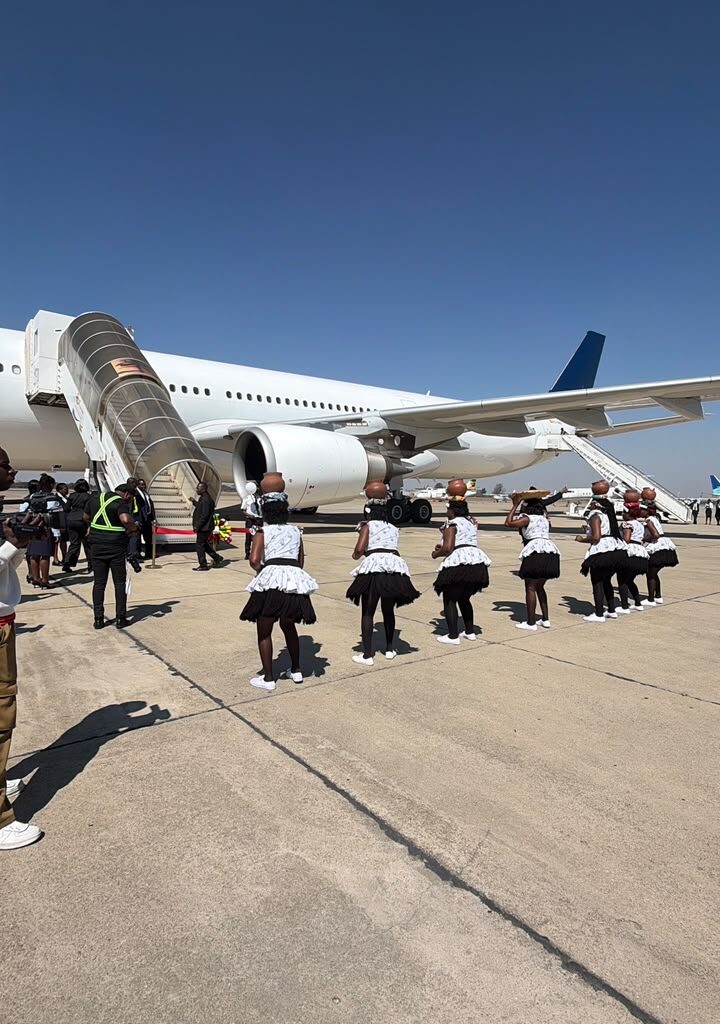
Harare- There are moments in a nation’s life when a single aircraft becomes more than metal and machinery — it becomes a symbol. The Airbus A330-300 that touched down at Robert Gabriel Mugabe International Airport this week is exactly that kind of symbol. After fourteen long years, Zimbabwe is once again lifting off toward London, and with it, toward the world.
For anyone who has lived through the isolation of the past decade and a half — the layovers in Johannesburg, Addis Ababa, Dubai and Nairobi just to reach a city that used to be a direct hop away — this is not a small thing. It is the restoration of dignity to Zimbabwe’s place on the global map.
A President Who Kept His Eyes on the Runway
None of this happens by accident. It is the direct result of a deliberate, sustained vision that President Emmerson Mnangagwa has championed since taking office: that Zimbabwe cannot prosper in isolation, and that connectivity — of roads, railways, and especially of air routes — is the lifeblood of trade, tourism and diaspora ties. The President has repeatedly stressed that Zimbabwe must be linked not only to its neighbours but to Africa and the rest of the world, and this week’s arrival of the Air Zimbabwe-branded A330-300 is tangible proof that this is not mere rhetoric. It is policy translated into pavement — or, more accurately, into runway.
Transport and Infrastructural Development Minister Advocate Felix Mhona said it best when he described the moment as one of excitement not just for his ministry, but for the nation as a whole. Standing on the tarmac alongside Deputy Minister Joshua Sacco, Tourism and Hospitality Industry Minister Barbara Rwodzi, Mutapa Investment Fund CEO Dr John Mangudya, and the UK’s Acting Ambassador Dr Jo Abbot, Minister Mhona was clear-eyed about what this route represents: the closing of a fourteen-year gap in Zimbabwe’s connectivity with Europe.
More Than a Route — A Hub in the Making
What makes this relaunch particularly exciting is the ambition behind it. This is not simply about giving Zimbabweans a direct way home for Christmas or a business trip to the City of London. Minister Mhona has been candid that the vision is bigger: a hub-and-spoke model that positions Harare as a gateway for the entire region. Travellers from Zambia, Malawi, Mozambique and beyond will now have reason to route through Zimbabwe to reach Europe, rather than bypassing us for airports elsewhere.
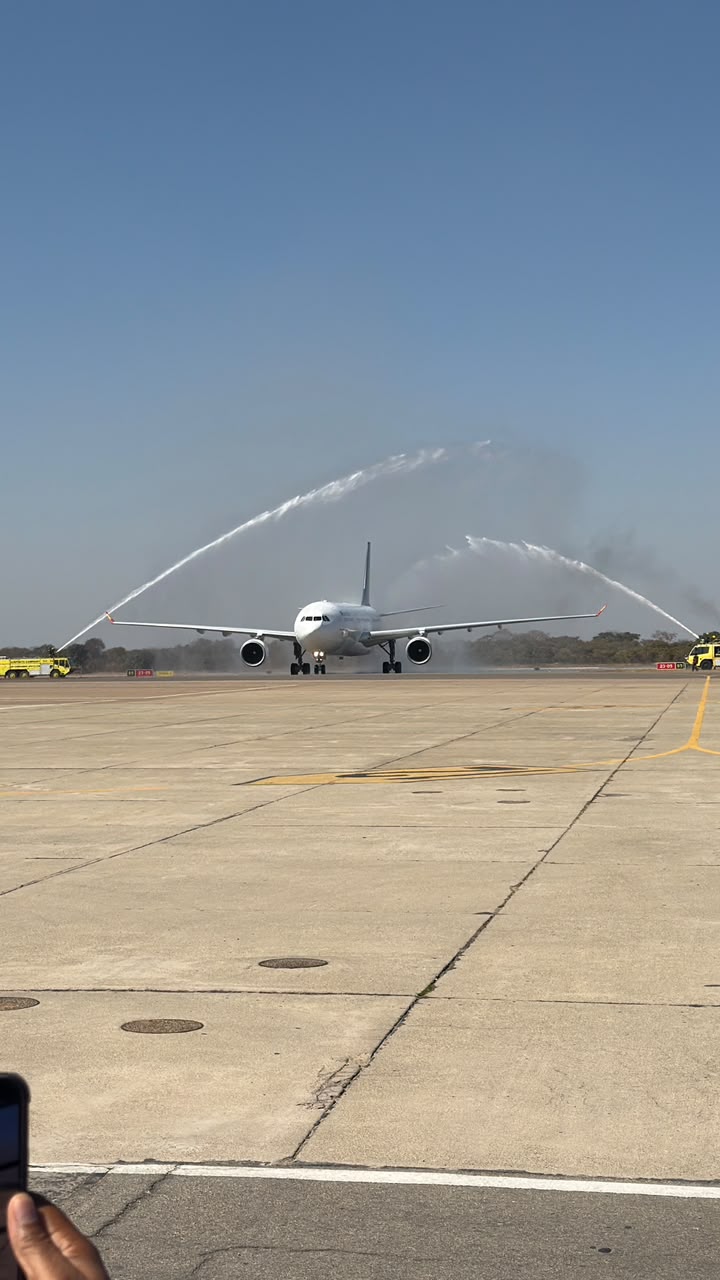 That is a bold repositioning. For years, the narrative was that Zimbabwe had been left behind as regional aviation hubs consolidated around us. This route flips that script — it says Harare is open, Harare is central, and Harare is ready to compete.
The commercial architecture behind the relaunch is equally pragmatic. By entering an ACMI wet-lease arrangement with Spanish carrier Plus Ultra Líneas Aéreas — under which Plus Ultra supplies the aircraft, crew, maintenance and insurance while Air Zimbabwe manages ticketing, passenger service and commercial strategy — the national carrier has found a sensible, low-risk path back into a long-haul market it could not have re-entered alone. This is smart sequencing: build the route, prove the demand, and grow national capacity over time.
What This Means for Ordinary Zimbabweans
Three flights a week — every Wednesday, Friday and Sunday — may sound modest, but for the diaspora community in the United Kingdom, this is enormous. No more punishing indirect routings. No more losing a day of travel to a connection in another country. And with promotional one-way fares starting from £490/US$495 and returns from £675/US$900, the pricing signals a genuine intent to make this route accessible, not a luxury reserved for the few.
For tourism, the implications are just as significant. Zimbabwe’s world-class attractions — Victoria Falls, Hwange, the Eastern Highlands — have long deserved easier access from one of the world’s largest outbound travel markets. A direct London link removes a major barrier that has, for years, pushed British and European travellers toward competitor destinations with better air access.
A Milestone Worth Celebrating
It would be easy to be cynical about a single flight route. But cynicism has never built a runway, signed a lease agreement, or reopened a market. What we are witnessing is the product of sustained diplomatic and commercial effort, anchored in a national leadership that has consistently placed connectivity at the heart of its development agenda.
As the inaugural flight prepares to depart for London Gatwick on Wednesday, it carries more than passengers and cargo. It carries the reassurance that Zimbabwe’s isolation is receding, route by route, connection by connection. That is worth celebrating — not as a partisan talking point, but as good news for every Zimbabwean who has ever longed for their country to be a little closer to the rest of the world.
Welcome back, London. We never stopped wanting to see you again.